Meet Our People: Trade Operations Director Miguel Navarro
In our 2026 Strategic Radar survey, 43.7% of 194 manufacturing and retail companies said their customs team had become more important to the business.
Miguel Navarro has worked in customs for 29 years. Now, he and three others lead trade operations for CSG – working with the international accounts that import into more than one country. In this article, he explains how he assists cross-border clients, the mistakes he sees on high-value imports, and where enforcement is going.

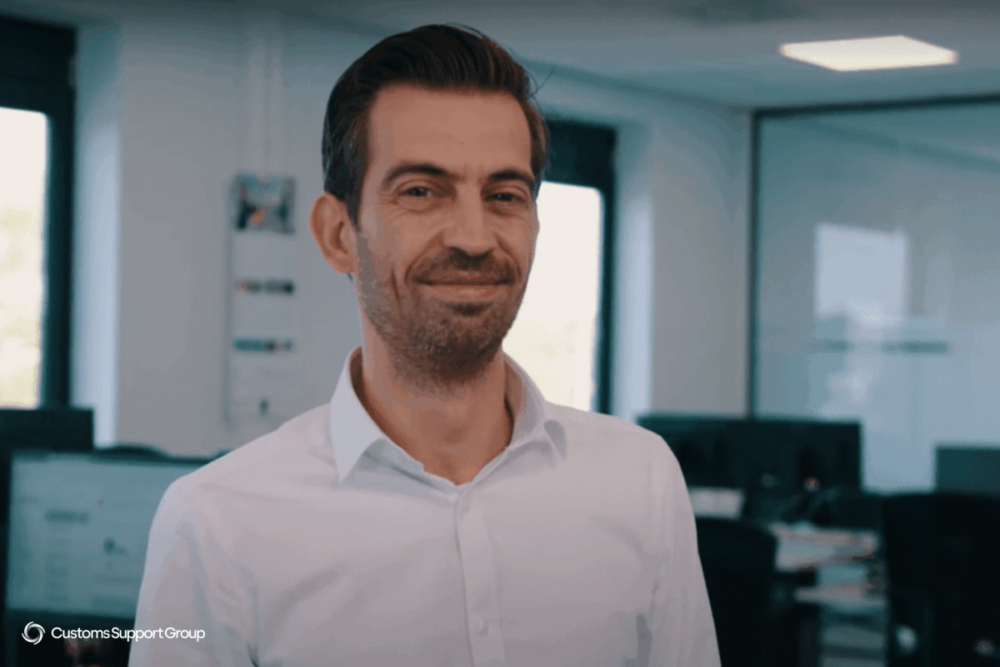
What follows is Miguel in his own words.
Contents:
- What does a trade operations director do?
- You started the Brexit team, so how did this evolve into trade operations?
- How did you get into customs?
- How much has changed in nearly three decades?
- You’ve worked on some high-value imports. What are the two biggest mistakes?
- Where do you think enforcement is heading?
- What would you say are the biggest priorities for international companies right now?
- How can Customs Support Group help businesses save money?
What Does a Trade Operations Director Do?
First, I should explain what our Trade Operations department does. It is our role to bring a combination of international customs, technological and operational knowledge to our more complicated accounts. Their customs function needs more than a few classifications and clearances, and we are that specialist support.
Because customs varies between countries, even within the EU, we have colleagues in each country that provide that local expertise, and work together as an international team on bigger accounts.
I act as one of the main contacts for international clients that are working on complicated cross-border projects, regardless of their location.
You Started the Brexit Team, So How Did This Evolve Into Trade Operations?
When I started the internal Brexit team, we came to know each other much better as a group, because we needed to work more closely together. The team had three jobs:
- The first was preparation of the company itself. What are our goals, what is the strategy for Brexit related topics.
- The second was guidance of our existing customer base across all of the countries.
- The third was onboarding the new leads that came out of nowhere. There was a flood of customers, especially UK customers, who now faced big issues importing into the EU.
We took those customers by the hand and guided them through all of the changes in legislation, and through the practical changes as well.
One of the things this highlighted for us is the gap between sales and operations. They do not speak the same language. We needed a team in the middle that can speak multiple languages and understand the business better, in order to find a solution for the customer.
That is how Trade Operations actually started. It began in the Netherlands, originally called Customs Control and Delivery, and evolved into in a function that we have in every country.
Working closely with the salespeople means we come as one towards a customer, answering all of their questions, commercial side, operational side, compliance and IT.
Brexit helped us to demonstrate that we are Customs Support Group, not different islands. This is what we have taken forward and grown.
How Did You Get Into Customs?
I started in October 1997, so 29 years now. I started as a courier, bringing physical documents from A to B. I got the opportunity to make some declarations and thought, well, this is really nice to do. 20 years later, I was still enjoying it.
The company I worked for was acquired by Customs Support in 2018. Since then I have had different roles.
What I have learned is that there are a lot of knowledgeable people here, and we all have the same goal: serving our customers, and doing it in a correct and efficient way. The people and the challenges keep it fun.
How Much Has Changed in Nearly Three Decades?
When I started in 1997, it was still very local and most processes were still manual. Today, it is mostly digital and the area of service is wider.
The systems are not the biggest change, though. Customs has gone from a confined function to a major supply chain discussion, with seemingly unrelated incidents quicky affecting one-another.
Two recent examples that helped communicate this to clients are Brexit, and the Trump administration’s tariffs. Both opened a lot of eyes within bigger companies, with customs and compliance becoming C-level discussions.
To be ready for such changes, systems need to be integrated correctly, products need to be classified correctly, and you need to be able to access data to assess how the disruption will affect you.
The common problem is the data. Whether it is a small, mid-size or large company, in my view it is not always correct. Or it cannot be touched, because it sits in different systems in different entities within the group.
A lot of companies are asking for assistance in making sure their data is structured in a good way.
Their own compliance teams can then understand it, and prepare the company properly for the changes coming from the European Commission.
They want their company to be prepared, but they need assistance. That is why they come to us, to make sure their company is not at risk.
This is very different to the “Can you process this declaration for us?” discussion in 1997.
(Related: Customs as a Strategic Capability)
You’ve Worked on Some High-Value Imports. What Are the Two Biggest Mistakes?
The first is the customs classification of the product itself. That can make a huge difference. What we often find is that the exercise was originally run by one person with some knowledge but never reviewed, or that designs and components change without the exercise being run again.
This is across the board, not just for high-value shipments. It can also be avoided with some regular checks on codes or product updates.
The consequence here is that some mechanisms rely on the commodity code used. If it is wrong, then you are unable to reliably determine the best way forward.
(Related: The Five Best Practices for Product Tariff Classification)
The second is more on the cash flow, when you are talking about high value shipments. There are legal possibilities within the EU that let you avoid the cycle of paying VAT and then reclaiming it later.
VAT rules are national, so you really need to understand how things are managed locally, and get in touch with an expert to guide you through it. This is a discussion that needs to take place before the goods are shipped, not once the goods have arrived. Then, there are additional costs to consider that could have been avoided.
That is what we see on high value shipments. Sometimes, it is cheaper to divert the route, because of the VAT implications you will face in certain countries upon arrival.
Where Do You Think Enforcement Is Heading?
Going back to Brexit, there was so much going on at the beginning that Customs did not have the resources to do all of the checks.
After a period, once Brexit was normal, they took the time and had more resources to do that due diligence and really check on the regulations.
Then, it came up to the customs authorities to check what had happened over the previous few years.
Now, with what is going on in the Middle East, with China plus one, with Russia and Ukraine, those authorities are more and more focused on things being done correctly.
There are more inspections taking place, especially on customs origin and dual-use goods, and also the circumvention of either.
The resources for enforcement will continue to grow as digitalisation empowers authorities. That is my expectation. Which means there will be more checks.
Luckily, I see the bigger companies noticing this too, and wanting to be better prepared than they are now.
(Related: UK Export Controls and Sanctions Enforcement: What Exporters Need to Know)
For me, the focus will still lie on dual use, because of the war between Russian and Ukraine, and the situation in the Middle East. The industries dealing with all kinds of machinery will be hit hardest, as a change to a single part is all it takes.
The other thing is that regulations which existed for years were never fully policed by the Commission itself. They are not reinventing them. They are more focused on checking them.
Take the F-gas rules. That regulation has been in place for years, but now the focus from the European Commission is on it. If you do not register yourself correctly and do the reporting on the European portal, your company can be targeted.
In the past, they did not often challenge it, and some of these companies did not even know about the regulation.
These older regulations are being modernised and getting more attention from the European Commission, especially on ESG-related topics.
What Would You Say Are the Biggest Priorities for International Companies Right Now?
The first is getting your classification right, and then monitoring which regulations touch your goods.
The second is keeping an eye on anti-dumping duty.
We see China as a trading partner from the EU perspective, but we still want to protect EU manufacturers. So there will definitely be a focus on products that are dumped.
That can be all sorts of things. Everybody knows e-bikes are under scrutiny, but there are many articles currently under investigation for anti-dumping, and shipping one part with another may affect both.
(Related: Bicycle Parts HS Code: When Parts Become an Unassembled Bicycle in the EU)
My expectation is that EU manufacturers are looking into China, checking the markets. If they see they are losing market, they will go to the European Commission.
People now understand that if you put a claim to the Commission, it will be investigated, and hopefully that protects their business. So I expect more lobbying from industries.
The third is the reporting that sits outside of border filings, for example:
- If you are importing oil, gas, or coal, you also need to do methane reporting
- If your goods qualify for CBAM, this is a separate filing
- If your goods fall under an Extended Producer Responsibility (EPR) framework, this is a separate filing
Those things are not part of an import declaration. However, the data in that customs declaration can be used as a basis to do that reporting.
Companies need to understand that they need to be prepared for all of the big regulations. We can update and inform them, but we cannot control this data. We can support them.
(Related: EPR Compliance: The Product Data You Must Hold)
How Can Customs Support Group Help Businesses Save Money?
Our Trade Operations and local teams provide a full portfolio of customs and trade solutions. It’s our role to not only help you stay compliant and on time, but to also utilise the mechanisms available to you so that you can be cost-efficient as you operate across borders.
The first thing we do is complete a customs compliance scan, where we look at where your operation is now and how we can improve it over the short and long term.